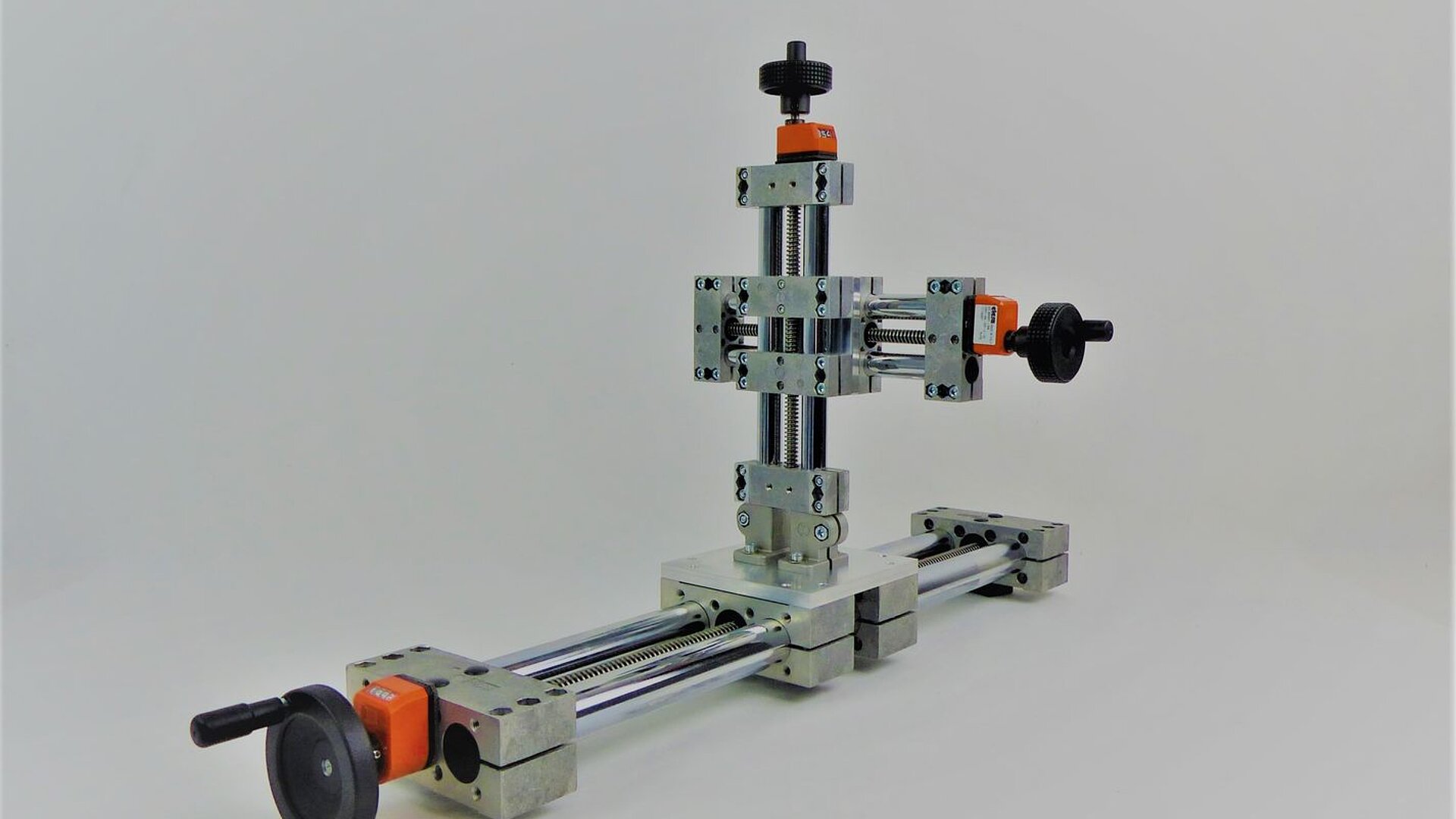
Linear units – designs, functionality, and applications
Linear units enable precise, controlled linear movements along a defined distance. They are used for positioning, height adjustment, alignment, and fine adjustment in technical systems. Typical areas of application are in mechanical engineering, industry, and research and development. INOCON offers a wide range of adjustment units made of steel, stainless steel, or precision tubes – for light to medium loads and for precise linear adjustment tasks.
Depending on the application, this can be advantageous and desirable.
What are linear units and how do they work?
Definition & Application
An adjustment unit is a mechanical element that allows components to move along a linear guide. It is used to precisely position or finely adjust components or tools in a machine or device.
Functional principle of linear adjustment
The basic principle consists of:
- a guide (round tube, square tube, precision tube, or profile)
- a carriage or movable element
- an adjustment mechanism (clamp, spindle, handwheel)
Depending on the design, the movement is:
- manually
- sensitively via spindle
- adjustable without play
- in a defined direction along an axis
Technical characteristics
Modern adjustment units are characterized by:
- precise and repeatable movement
- stable guidance
- controlled adjustment with adjustable clamping force
- high durability
- easy operation
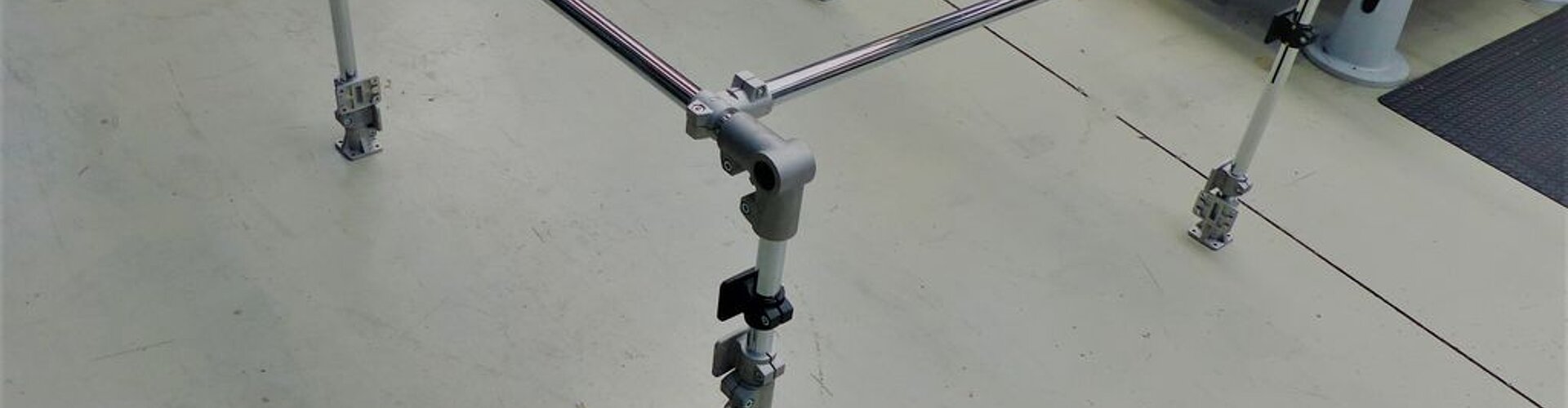
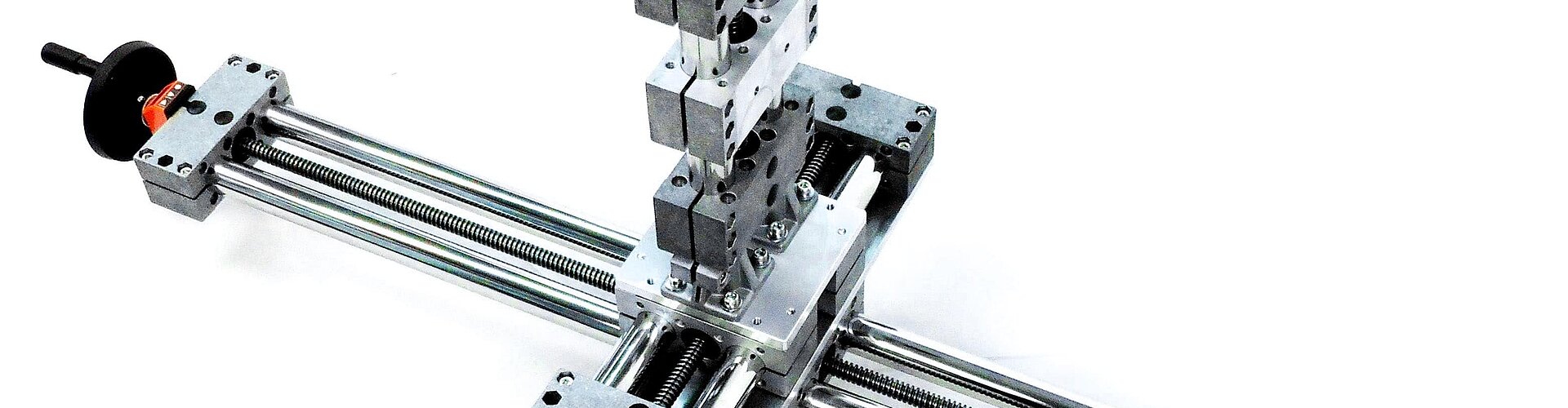
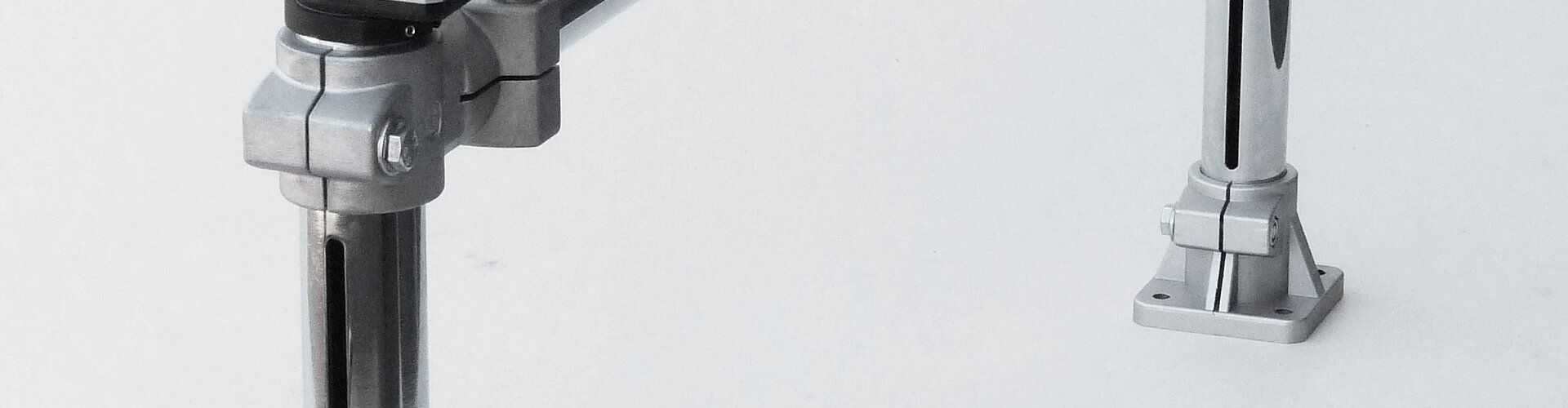
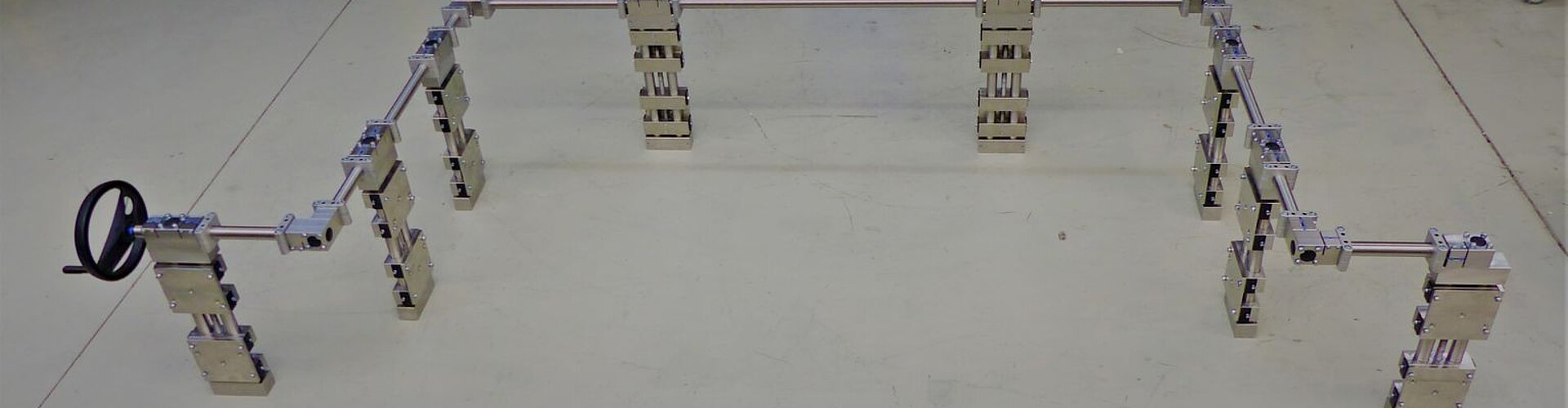


What adjustment units are available? – Designs & types
Single-tube adjustment unit
A compact, economical solution for simple linear adjustments. Guidance is provided by a single round tube. Ideal for:
- Light positioning tasks
- Simple machine modules
- Space-saving designs
Double-tube adjustment unit
Two parallel tubes ensure high rigidity and stability. Advantages:
- Better torsional strength
- Higher load capacity
- Precise slide movement
Telescopic adjustment unit
An extendable design that allows for flexible length adjustment. Typical areas of application:
- Variable distances,
- adjustable support arms
- modular test equipment
Spindle adjustment unit / spindle guide
This variant uses a spindle for high-precision positioning. Features:
- Sensitive, controlled adjustment High repeat accuracy Ideal for measuring and testing setups
- Adjustment unit with slide / travel slide
- The slide moves along a tube or profile and enables:
- Linear, defined movementsReliable guidanceManual adjustment
Material variants
Adjustment units are available as:
- Steel version – high stability, robust
- Stainless steel version – corrosion-resistant, hygienic
- Precision tube-based units – high accuracy and fit
Advantages of linear units
Functional advantages
- Precise linear movement
- Fine and controlled adjustment
- Repeatable positioning
- Stable guidance
Features & benefits
- Simple manual operation
- Long service life
- Robust construction
- Flexibly configurable
FAQ – Frequently asked questions about linear units
What is an linear unit?
A mechanical element for linear adjustment and positioning along a guide.
How does an linear unit work?
A slide moves along a tube or profile and is positioned using clamping, a spindle, or a handwheel.
What types of linear units are available?
Single-tube, double-tube, telescopic, and spindle adjustment units, as well as variants with slides.
Which linear unit is the most precise?
Spindle linear units offer the highest fine adjustment and repeat accuracy.
What are linear units used for?
For adjustment, positioning, and setting tasks in machines, systems, test benches, and test facilities.
What materials are available?
Steel, stainless steel, and precision tubes, depending on requirements.
Contact
Do you have a special challenge in the field of research and development? Then contact us! We look forward to your inquiry and will help you find just the right solution for your application.