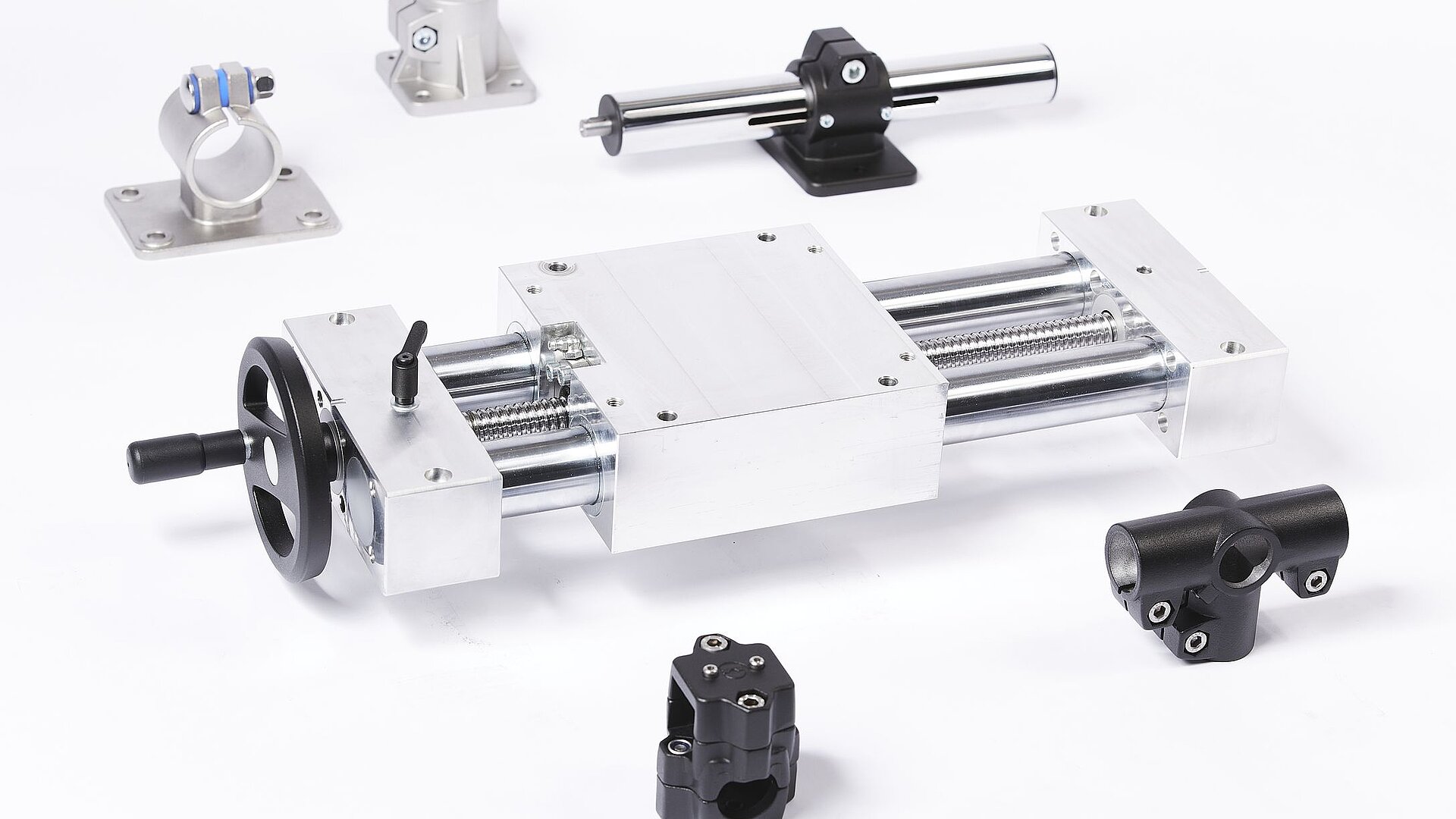
Why linear units are indispensable
In technical mechanics, movements cannot be performed arbitrarily. For a safe, precise, and process-stable design, movements must follow a precisely defined travel path. Any deviation, whether lateral, upward, or downward, can lead to machine damage, scrap, or even endanger employees. A basic distinction is made between radial movements (circular) and linear movements. Linear movements run in a straight line along a defined path and are ensured in mechanical engineering by linear units or linear guides.
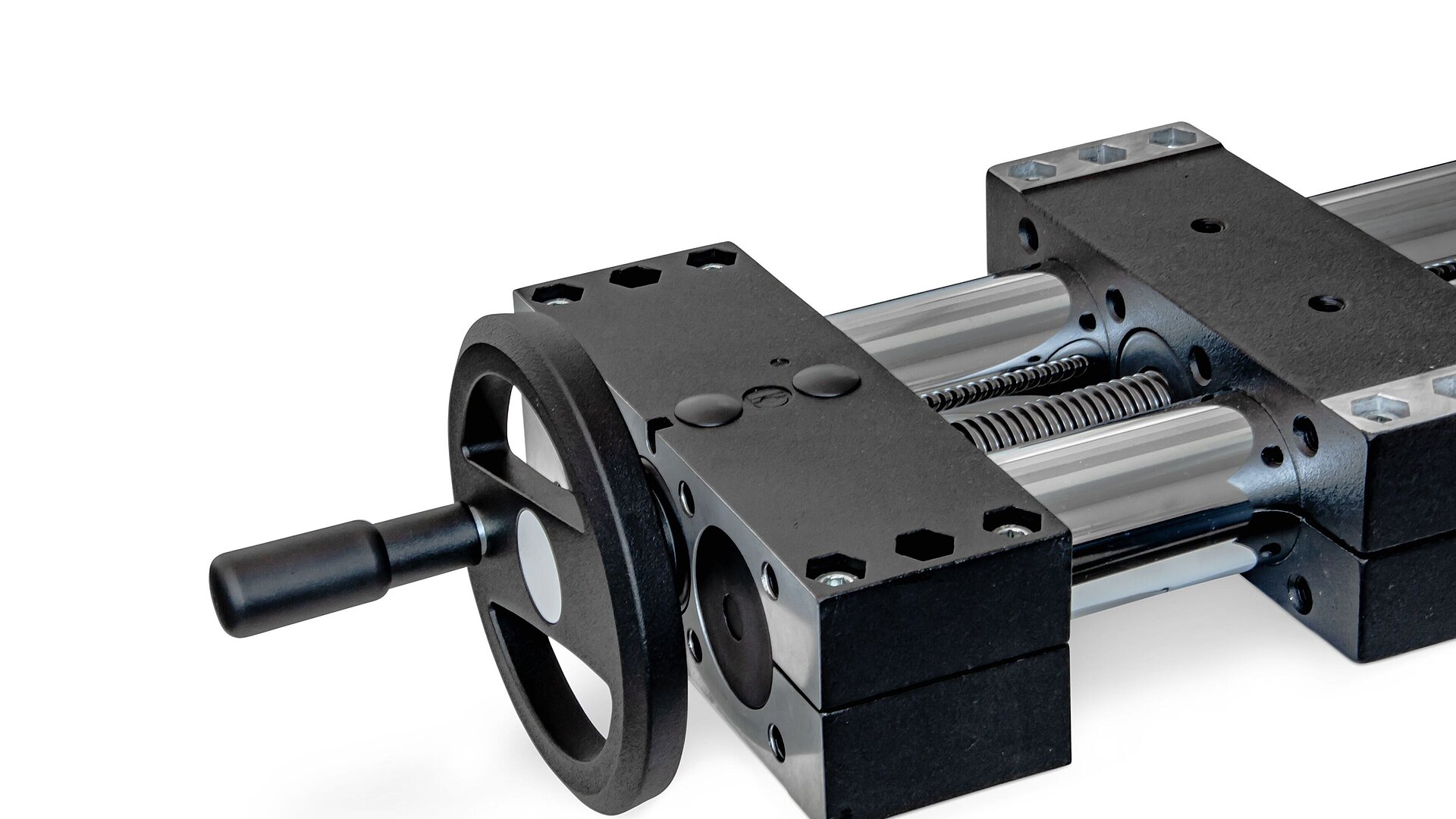
What is a linear unit?
A linear unit ensures that an actuator, sensor, or module system is guided along a straight path with no play, high precision, and repeatability. It reliably prevents unwanted deflections or rotations, unless these are intended by the design. Linear units combine guidance and drive:
- manual
- mechanical/spindle-driven
- pneumatic
- hydraulic
- or motor-driven
This enables flexible and robust solutions for almost any industrial application.
How does a linear unit work?
A linear unit consists of two core components:
1. The guide unit
This ensures that the movement is precisely linear without tilting or twisting. Depending on the
type, the following are used:
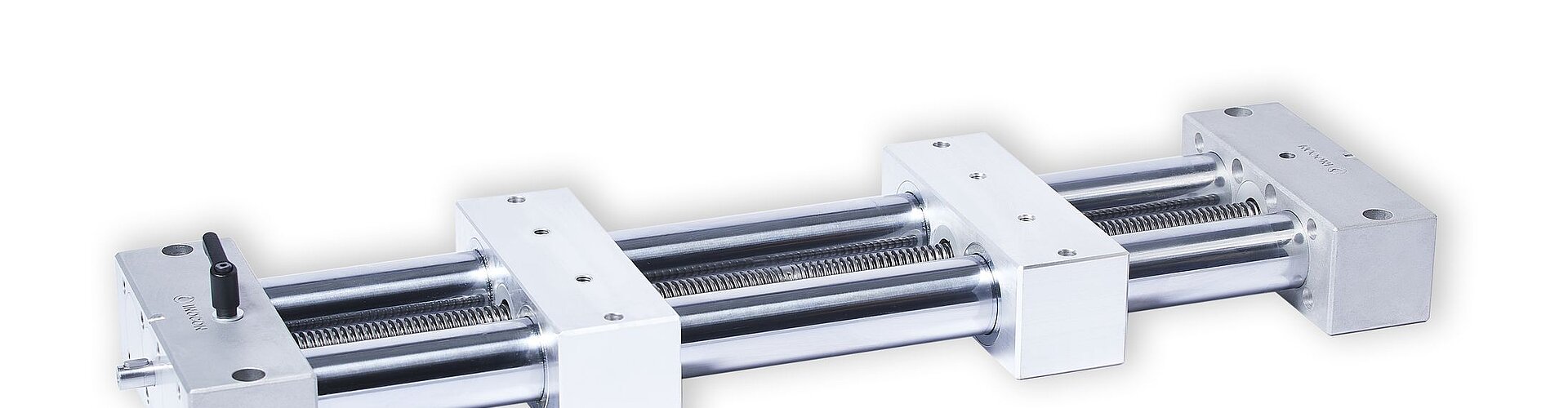
- Precision tubes (single-tube/double-tube systems)
- Linear roller guides
- Sliding carriages
- Telescopic guides
- Spindle guides
2. The drive
This determines how the movement is generated.
Spindle drives or linear roller guides are particularly relevant for high precision, as they enable backlash-free, finely controllable movements. By combining several linear units, multi-axis linear systems can be constructed – ideal for complex, automated motion sequences in mechanical engineering.
What types of linear units are available?
Linear roller guides
- Ideal for heavy loads and robust industrial applications
- Often installed in pairs
- Important: regular lubrication
- Very high load capacity and precision
- Perfect for lightweight components, sensor adjustment, and quick adjustment work
- Available as round or square tubes
- Round tube: rotatable for flexible positioning
- Square tube: rotationally stable for precisely defined mounting points
- Quick manual adjustment, non-rotatable
- Highly precise, stable guidance
- Ideal for modular designs
- Flanged on one side only → high flexibility in installation
Space-saving and dynamic use
Spindle guides
- Highest precision and repeat accuracy
- Standard in CNC machining centers and 3D coordinate measuring machines
- For sensitive, controlled movements
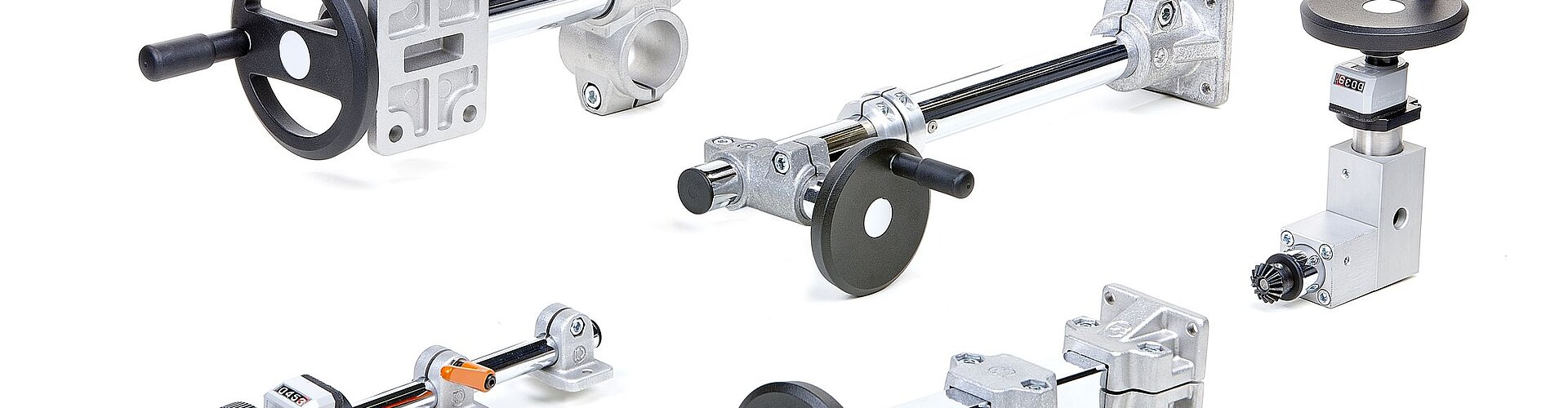
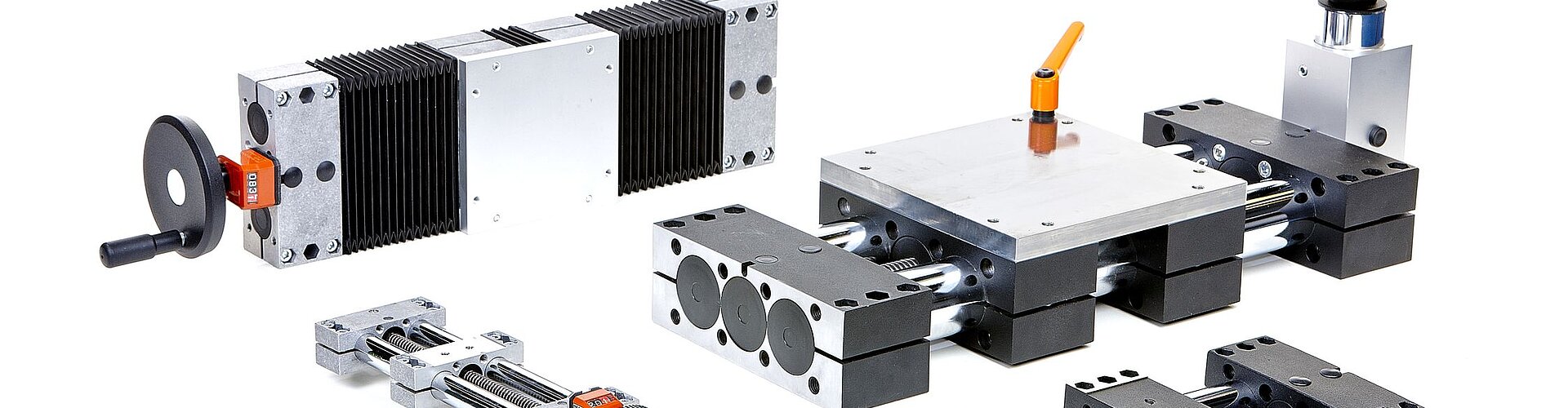
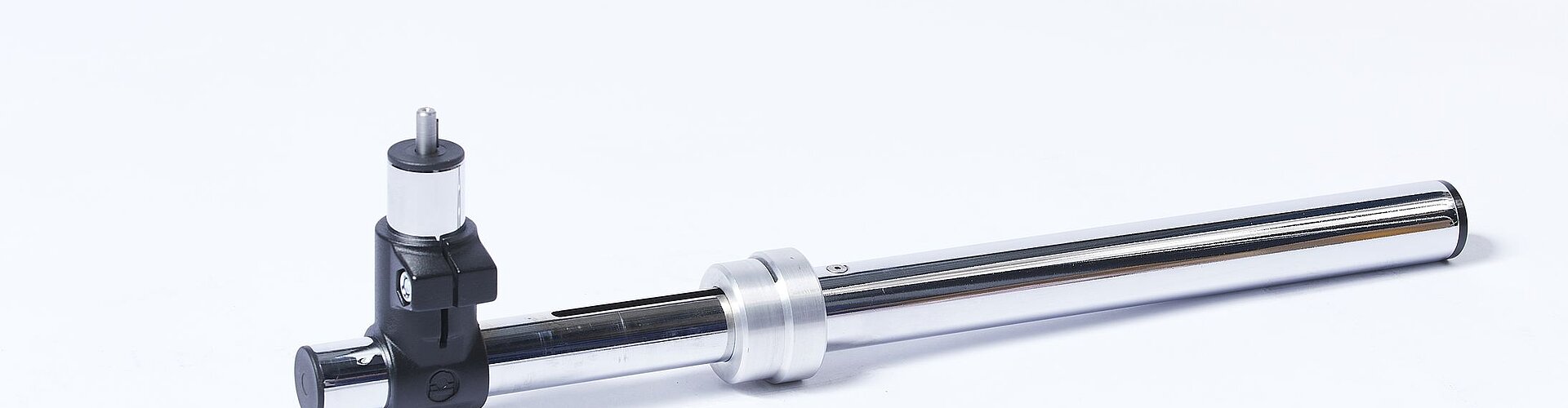
Areas of application for linear units in mechanical engineering
Loading and unloading systems
Linear units are indispensable here. They enable high cycle times, reliable end positions,
and precise motion sequences, even with parallel or multi-stage work steps.
CNC machining centers
Spindle or double-tube linear guides ensure that approach positions are always reached with precision.
This This ensures compliance with tolerances, dimensional accuracy, and
machining quality.
General mechanical engineering & plant construction
Wherever defined linear movements are required, linear units offer a
robust and reliable solution – from prototype construction to series production.
Why INOCON linear units?
INOCON manufactures linear systems that meet the highest quality standards – resilient, durable, and precise.
Specializing in single and double tube adjustment units.
These designs offer an optimal balance of:
- Robustness
- Precision
- Flexibility
- Easy installation
The guide systems can be tailored to the required accuracy, load, and drive type
for everything from rough adjustments to precision applications. Easily expandable,
compatible, and adaptable at any time → ideal for design, prototyping, and series production.
Contact
Do you have special challenges in the area of research and development? Contact us. We look forward to your inquiry and will help you find just the right solution for your application.